


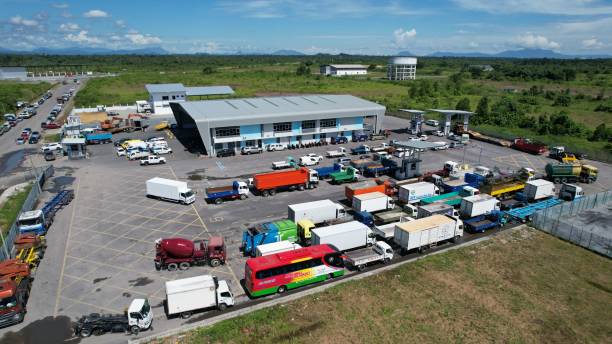
The current logistics environment is highly dynamic, and infrastructure is no longer only about space, but it is the support structure of reliability, compliance, and customer confidence. The facility presented on https://www.divinetrans.com/page/facility represents a well-thought-out ecosystem in which warehousing, security, maintenance, and support for the employees work in harmony. The facility, designed to deal with high-value and sensitive cargo, is an example of how operational accuracy and well-thought-out strategic planning can establish a reliable logistics center. Each of the infrastructure sections promotes efficiency, safety, and scalability, which guarantees clients the same safe transportation solutions.
Infrastructure Design and location Strategy
The facility is strategically situated in the Greater Sacramento area, which is a superb transportation route, both regional and interstate. The headquarters, which is about 40,000 square feet, is specifically designed to be used as an administrative unit, a warehouse, and a fleet service unit. This infrastructure combines office facilities, conference rooms, training facilities, and driver facilities, unlike traditional warehouses, which only think of storage facilities. The design is also meant to minimize operation delays and enhance the interaction between logistics managers and their warehouse teams and the drivers.
Certified Warehouse Operations GDP & GMP Certified
The 18,000-square-foot GDP- and GMP-certified warehouse is one of the greatest pillars of the facility. The certifications denote a high level of compliance with the industry standards of the treatment and storage of sensitive products, in particular, pharmaceuticals and temperature-controlled cars. The warehouse is controlled and kept clean to ensure that the products are not spoiled. Security and compliance are key priorities, which are assisted by high-level surveillance and design inventory systems. Major characteristics of warehouses are the following:
- 48 CCTV cameras for 24/7 monitoring
- Secure storage facilities of sensitive cargo.
- Conformance to GDP, GMP, and ISO standards of quality.
- Planned storage patterns in order to streamline loading and shipment.
High-level security and surveillance systems
The facility security is more than mere surveillance. There is a multi-layered system of protection of freight, vehicles, and information about operations. Real-time tracking, limited access, and continuous monitoring systems collaborate to reduce risk. Monitoring systems are useful in supporting temperature-controlled shipments by monitoring the conditions of the cargo during all the processes of handling and storage. These will minimize the chances of spoilage, damage, or unauthorized access.
Internal Maintenance and Repair Depot
One of the strongest aspects of the infrastructure is its in-house maintenance and repair shop. This section occupies about 14,000 square feet and is dedicated to the maintenance of the fleet by keeping it ready for the road and up to the safety standards. With maintenance operations on-site, downtime is greatly decreased, and the technical problems are immediately responded to. The repair plant will consist of:
- Four repair bays, which are well furnished.
- Two maintenance lines
- Professionalized equipment and technicians.
- The ability to accommodate various trucks and trailers at the same time.
Employee Support and Amenities Driven
In addition to efficient operation, the facility has a high level of concern regarding the welfare of its workers. Good facilities, such as lounge facilities and shower facilities, are given to drivers and staff. Conference rooms and training rooms stimulate professional growth and the coordination of teams. Through establishing a working climate, the company helps to increase morale, communication, and quality of service. Comforting employees is not a donation gesture but a direct effect of performance, timeliness, and responsibility in the logistic activities. The client experiences will be smoother eventually through a team that is well supported.
Technology and Operational Visibility
Contemporary logistics is highly technologically oriented, and this fact is incorporated in the facility in terms of combined telematics and tracking devices. The performance of fleets, cargo temperature, and shipment movements are constantly observed to make the operations fully visible. The real-time updates enable the logistics managers to react proactively to any changes in route, delays, or the environment. Such a degree of digital connection increases transparency and contributes to data-driven decision-making. Both the clients enjoy precise tracking data and reliable delivery schedules that further instill confidence in the transportation abilities of the company.
Demonstration of Quality and Compliance
The aspect of compliance is entrenched in all of the operational levels of the facility. Warehouse certifications to fleet maintenance standards, every process is in line with the regulatory demands and the industry best practices. Quality control systems are developed in such a manner that errors are reduced to a minimum and documentation is maintained. This promise guarantees that deliveries, especially those in health care and temperature-sensitive industries, are delivered per stringent distribution standards. The design of the facility is indicative of long-term consideration to maintain operational perfection as well as to integrate with the changing industry regulations.
Conclusion
The DivineTrans facility is not just another logistics center, but it is an all-around operating hub designed to provide security, efficiency, and compliance on all levels. The infrastructure has its certified warehouse in terms of GDP and GMP, developed surveillance systems, a repair shop at its heart, and employee-oriented facilities, which contribute to the smooth freight management process and storage-dispatch. Reliability, due to strategic location, cutting-edge technology, and maintained maintenance systems, is beneficial to manage operational risk.
